
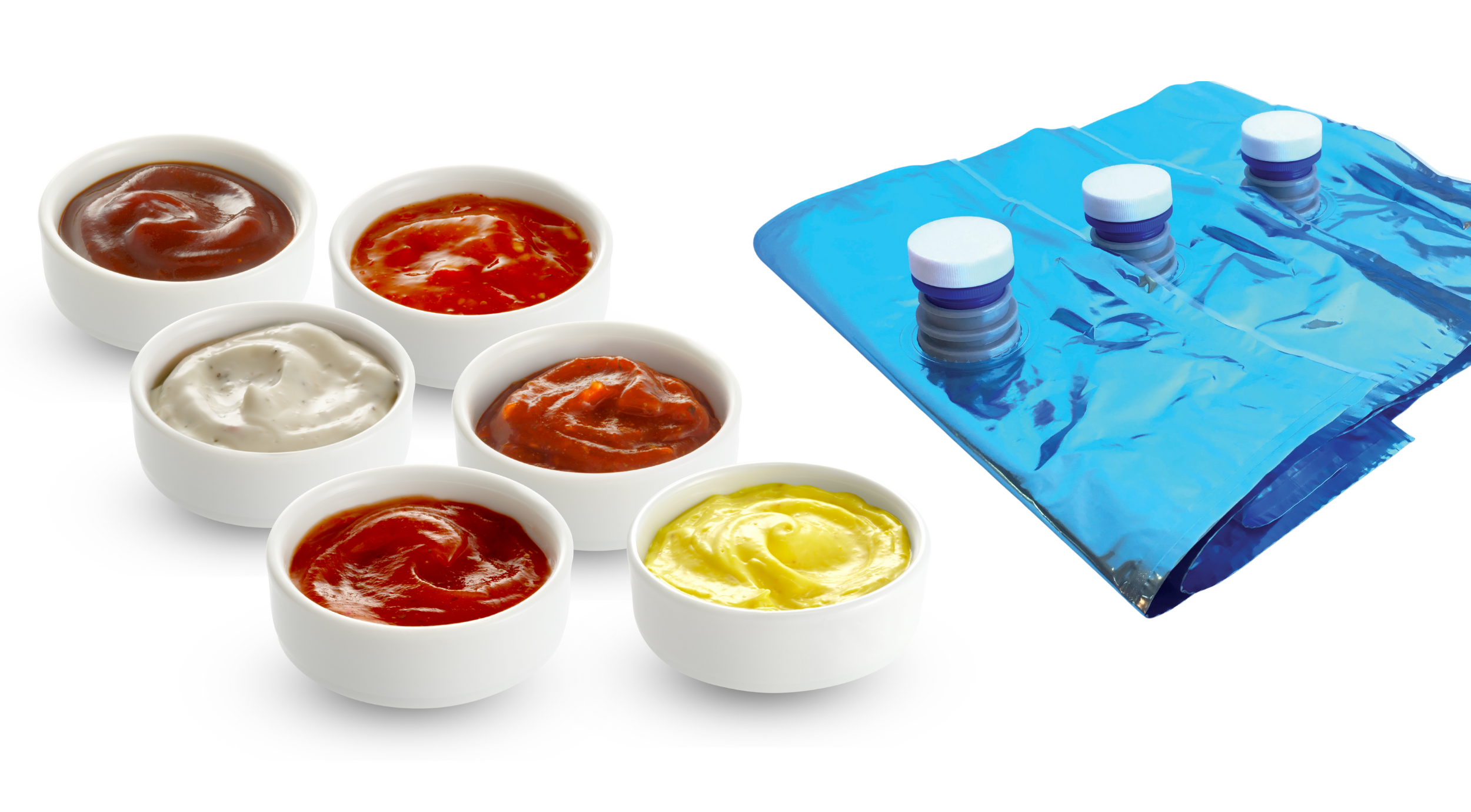
Flexible packaging plays an important role in the transportation, storage, and dispensing of condiments, spreads, and sauces such as ketchup, pizza sauce, tomato concentrate, and fruit purées. These packaging solutions are designed for functionality and ease of use.
Aseptic and Non-Aseptic Options
The bags are designed with oxygen barriers and can be produced for either aseptic or non-aseptic filling, depending on the product. For example, ketchup does not require aseptic conditions due to its natural stability, while other sauces or tomato-based products may require them. A variety of fitments and closures can be selected to support different dispensing and resealing needs.
Sustainability in Packaging
With increasing demand for more sustainable alternatives, flexible bags offer a lightweight, space-efficient solution compared to rigid packaging such as cans and plastic tubs. Flexible bags also have a lower carbon footprint than rigid packaging, reduce transportation costs due to their lighter weight, and eliminate the need for redistribution after emptying
Common sizes in this sector include 3L, 5L, and 10L, which are widely used in food service settings like pizzerias, restaurants, and catering. These packaging options are practical for handling, resealing, and refrigerated storage, while also offering advantages in storage, transport, and recycling.
Full Range of Sizes and Volumes
Aran supplies a wide range of bag-in-box volumes to meet the needs of all market segments and customer requirements — from 3 liters to 1,500 liters. This supports diverse applications, from small-scale food service to large industrial processing.
The Shift towards Recyclable Packaging.
There is a clear trend toward recyclable packaging, especially in Europe and the United States. One key development is the use of mono-material polyethylene bags with in-line extruded EVOH, which meet local recyclability standards. Aran is developing bags that are compatible with Code 4 recycling streams and can incorporate recyclable fitments and films.
Balancing Performance and Sustainability
Advances in materials and design are helping flexible bags meet shelf-life and durability standards while supporting recyclability. Progress in barrier materials and structural design is helping meet these expectations and support the transition to more sustainable packaging systems.
From fruit concentrate to tomato sauce, the goal is to provide packaging that balances food safety, waste reduction, and the growing need for sustainable solutions in the food industry.