
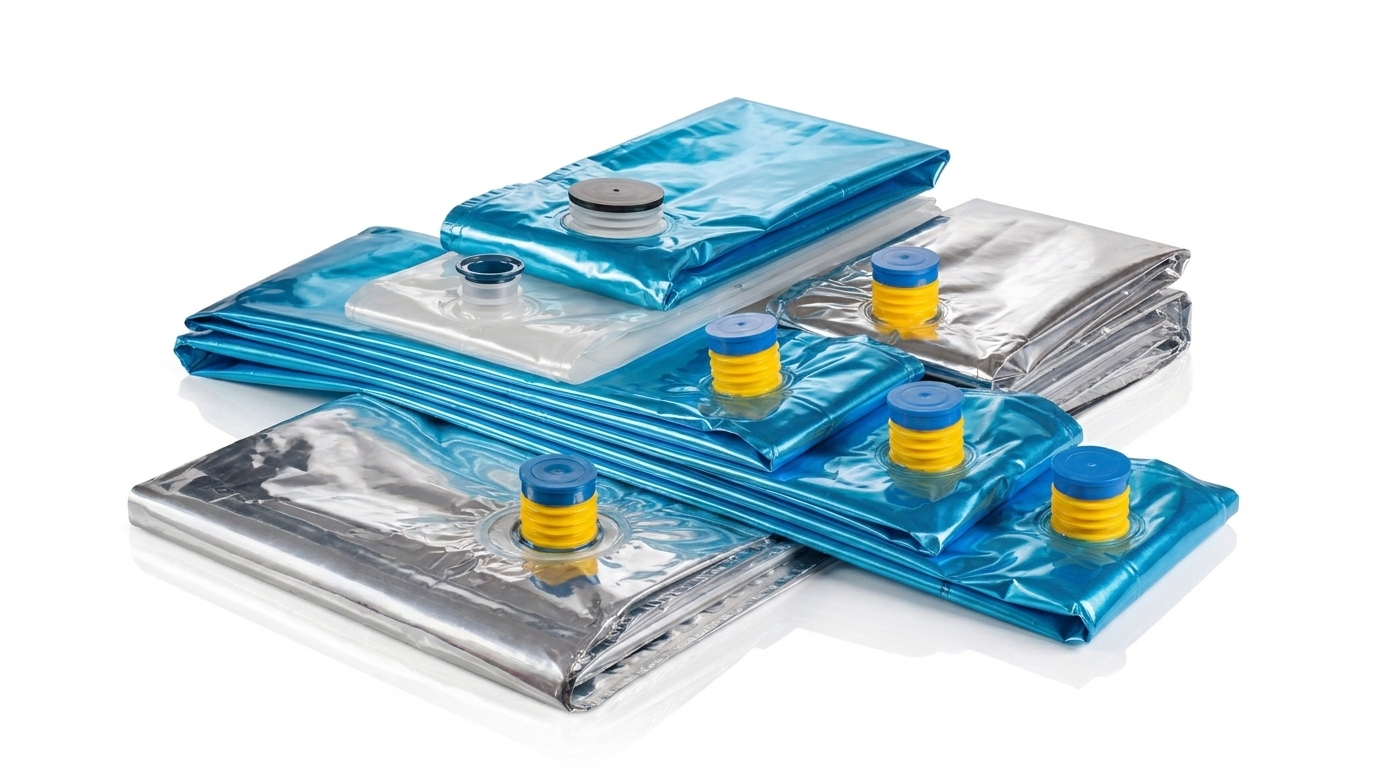
The global liquid food industry is becoming increasingly complex. Supply chains span continents, regulatory frameworks continue to evolve, and manufacturers are expected to deliver consistent product quality across diverse production and distribution environments.
Within this landscape, aseptic packaging has become far more than a preservation method. It is an engineering discipline that directly influences product safety, shelf life, manufacturing efficiency, and supply chain reliability.
These applications include juices and fruit concentrates, dairy products, liquid eggs, sauces, tomato products and other sensitive liquid foods
For liquid food producers, packaging success depends not on a single material or component, but on how multiple engineering parameters work together throughout the product’s lifecycle.
This is particularly relevant for sensitive liquid products, where temperature variation, oxygen exposure, and handling conditions can affect product quality.
For aseptic Bag-in-Box packaging, this means designing the complete system to protect product quality from filling and sealing through transport, storage, and final dispensing.
Engineering Beyond Individual Components
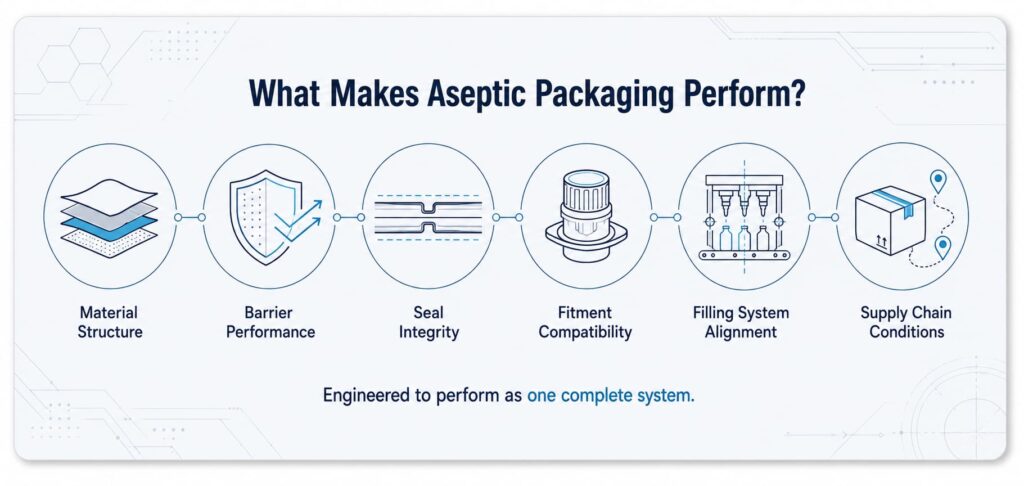
The long-term reliability of an aseptic bag-in-box solution is determined by the interaction between material structure, barrier performance, sealing technology, fitment design, filling equipment, and the mechanical stresses encountered during transportation and storage.
Failures rarely originate from a single component. More often, they develop at critical interfaces, such as seal areas, fitment-to-bag connections, or under repeated mechanical loading throughout distribution. Reliable aseptic packaging therefore requires a system-level approach that considers how these elements interact throughout the product lifecycle, rather than optimizing each one independently.
Engineering for Real Supply Chains
Packaging is ultimately tested outside the production facility. Liquid food products may travel thousands of kilometers through changing climates, transportation methods, storage conditions, and handling environments before reaching their final destination.
These variables introduce mechanical stresses and environmental conditions that cannot be fully replicated in laboratory settings alone, making engineering validation an essential part of the development process. By evaluating packaging under conditions that reflect real supply chains, manufacturers can identify potential weaknesses before commercial deployment.
With production facilities and operations across North America, Europe, and the Middle East, Aran is exposed to diverse operating environments that shape how packaging behaves in practice. This geographic footprint provides insight into real-world logistical conditions and supports the development of solutions that maintain consistent performance across varied supply chains.
Material Architecture: Balancing Performance Requirements
Modern aseptic Bag-in-Box applications rely on multilayer material structures that must satisfy several engineering objectives simultaneously. Oxygen barrier performance remains the primary factor in preserving product quality and extending shelf life, while mechanical durability, seal reliability, processability, and compatibility with evolving sustainability requirements must also be considered.
For example, packaging structures designed for tomato products, fruit concentrates, or dairy applications may require different barrier, mechanical, and fitment characteristics depending on product sensitivity, filling conditions, and distribution requirements.
These objectives are inherently interdependent. Improving one characteristic may influence another, making material selection an exercise in engineering balance rather than optimization of a single property.
Packaging must also be designed for efficient industrial production, supporting stable filling processes, consistent sealing, and reliable operation on high-speed manufacturing lines.
Regulatory requirements have likewise become an integral part of the design process. Material structures are evaluated not only for current compliance, but also for evolving requirements related to food contact, recycling, and packaging sustainability. This helps manufacturers maintain long-term packaging stability across multiple markets.
Engineering the Complete Packaging System
As global food distribution continues to evolve, the engineering challenge is no longer to optimize individual packaging components, but to understand how materials, manufacturing processes, filling systems, logistics, and regulatory requirements interact throughout the package lifecycle.
Reliable aseptic packaging is ultimately the result of engineering decisions that balance these interconnected requirements. For manufacturers, this approach can support more stable filling operations, fewer packaging-related disruptions, and more predictable performance throughout distribution.
As supply chains become longer and more demanding, this integrated approach is increasingly what distinguishes packaging systems that perform consistently in real-world conditions.
To learn more about Aran’s aseptic and Bag-in-Box packaging solutions, visit our Aseptic Packaging
and Bag-in-Box Solutions pages.